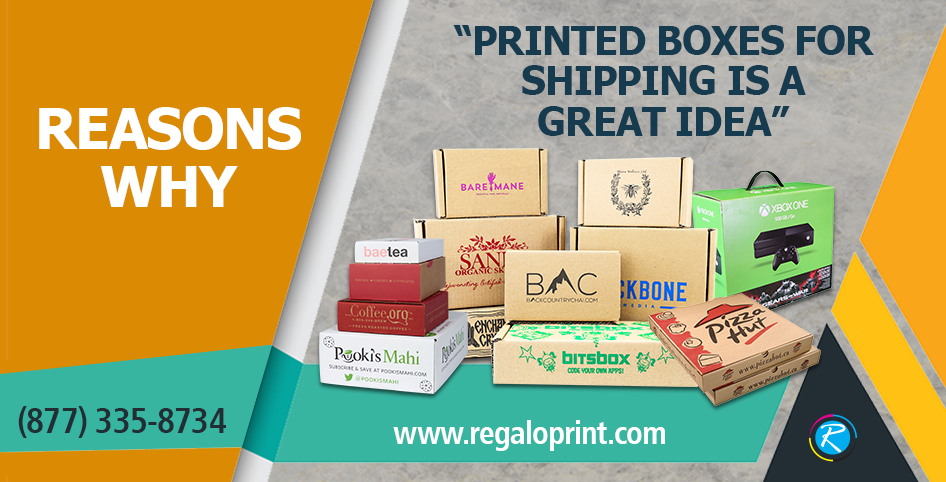
Somewhere on social media right now, someone is filming themselves opening a box. Not unwrapping a gift from another person — receiving a package they bought for themselves, and turning the process into content. That habit barely existed for direct-to-consumer orders twenty years ago, and it's the entire reason the case for custom printed shipping boxes has changed. A box that once existed purely to survive a delivery truck now has a second job: being worth filming.
Most product-based businesses start with a plain corrugated box — the kind sold in bulk at any shipping supply store — because it's the obvious default and there's nothing wrong with it functionally. It ships, it protects, it costs very little. But it also does nothing for the brand once the tape is cut, and for a business trying to build repeat customers instead of one-off buyers, that's a real cost, even if it never shows up on an invoice.
The Real Cost Comparison
A stock brown shipping box typically runs well under a dollar a unit at volume. A printed mailer box — a one-color exterior logo on Kraft stock, ordered in a few hundred units — usually adds somewhere in the range of a few dozen cents to a dollar or more per unit, depending on print coverage, box size and order volume. That's the number that stops a lot of founders from customizing at all: it looks like pure added cost with no direct return.
The math changes once you count what the box replaces. A printed exterior with a logo, brand colors and a short line of copy does a version of the job a paid social impression does — except it arrives in the customer's hands, sits on their counter for an afternoon, and gets photographed for free by people who are already happy enough with the purchase to unbox it on camera. None of that is guaranteed, but it's a plausible return on a cost measured in cents, which is a very different proposition than most paid acquisition channels.
What the Box Is Actually Selling
The unboxing moment works on a specific kind of psychology: the customer has already paid, so there's no more selling to do in the traditional sense. What the box sells instead is confidence in the decision they just made. A considered exterior print, tissue that matches the brand palette, or a printed interior message tells the customer their order was handled by a company that pays attention — which is exactly the impression that turns a first purchase into a second one.
That's also why packaging matters more for some businesses than others. A commodity product bought on price alone gets little lift from a nicer box. A product bought partly on brand — skincare, specialty food, apparel, anything with a story behind it — gets a disproportionate amount of that story reinforced in the thirty seconds between the doorbell and the product being in the customer's hands.
Exterior vs. Interior: What to Customize First on a Limited Budget
Not every business can afford to fully customize a box on day one, and trying to do everything at once is usually how a packaging budget gets wasted before it delivers anything. The order that tends to return the most per dollar spent runs roughly like this:
Exterior print earns its cost back fastest because it's seen by everyone who touches the package — the customer, anyone at their door, and anyone in the unboxing photo — while interior customization is seen only by the customer, which makes it a slower, more brand-driven investment rather than an acquisition one.
Getting the Specification Right
Once the budget question is settled, the box itself needs to fit the product rather than the other way around. A mailer box sized to the product with minimal void fill ships cheaper per unit than a generic size padded out with air pillows, and it looks more deliberate on arrival — a box that's clearly sized for what's inside reads as considered packaging, not an afterthought.
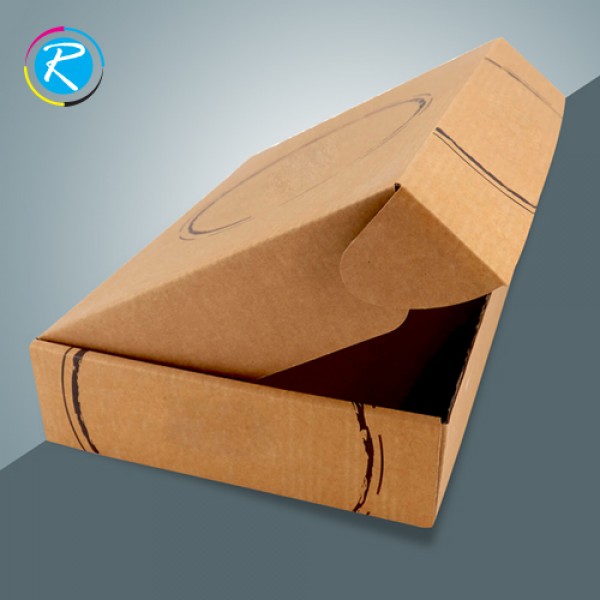
Kraft mailer stock is the standard starting point for e-commerce for a reason: it's sturdy enough to survive freight handling, takes one- or two-color print cleanly, and its natural brown tone reads as considered rather than plain, which is exactly the effect most direct-to-consumer brands are chasing. It also folds flat for storage before assembly, which matters more than it sounds like once a business is fulfilling more than a handful of orders a week and needs to store flat stock rather than pre-built boxes.
Minimum order quantities are the other practical constraint worth planning around early. Custom printed boxes are ordered in batches, not one at a time, so the specification — size, stock, print colors, closure — needs to be locked in before a run starts. Getting a physical proof before committing to a full print run is worth the extra few days it takes, since a color or fit issue caught on a sample costs nothing compared to the same issue discovered in a completed batch of a few hundred boxes.
What Changes as Order Volume Grows
The calculus around custom packaging shifts meaningfully as a business scales, and it's worth planning for that shift rather than being caught off guard by it. A business shipping a few dozen orders a week is usually better served by a simple, low-color exterior print on a moderate order quantity — enough to look considered without tying up cash in a large inventory of boxes that might need to change if the branding evolves. The per-unit savings on a larger print run rarely justify the carrying cost of unsold packaging at that stage.
Once weekly order volume climbs into the hundreds, the per-unit economics of custom packaging improve substantially, and that's usually the point where a fuller interior treatment — printed tissue, a branded insert, multi-color exterior work — starts to pencil out. It's also the point where it becomes worth negotiating directly on lead times and reorder cadence, since running out of packaging mid-fulfillment is a far more expensive problem for a high-volume operation than for one shipping a handful of orders a week.
Common Ways This Goes Wrong
Most of the packaging decisions that end up costing a business money aren't about picking the wrong stock — they're procedural. A few patterns show up often enough to be worth flagging before an order goes in:
Where This Actually Pays Off
Custom packaging isn't a universal requirement — a business shipping high volumes of low-margin commodity goods may never see a meaningful return on it. But for a product-based business trying to convert first-time buyers into repeat customers, or trying to generate organic content without paying for it, the printed box is one of the few marketing costs that gets delivered directly into the hands of someone who already chose to buy. Starting with exterior print, sizing the box to the product, and scaling interior customization as order volume grows is the sequence that keeps the investment proportional to what the business can actually expect back from it.