 View Details

Packaging Supplies
Tuck Box
Starting at
$210
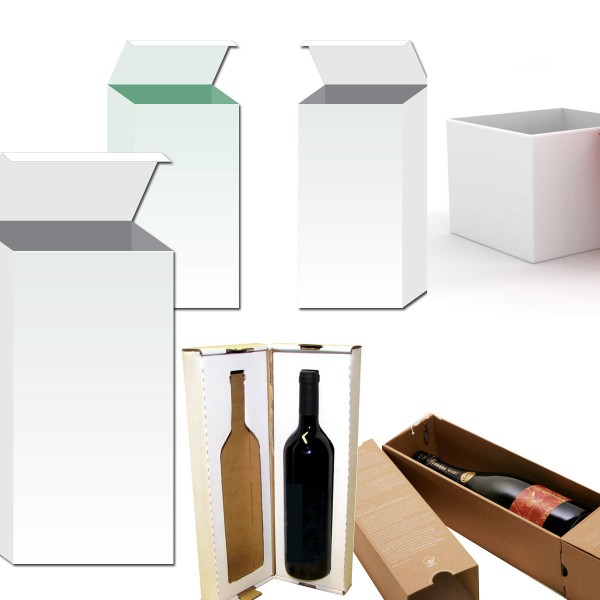
The tuck box is the folding carton most people picture when they think "box" — a single die-cut and glued blank that closes when a flap tucks into a slot, no tape or extra hardware required. Straight-tuck and reverse-tuck are the two standard closures, and an auto-lock or 1-2-3 bottom adds a self-forming base for anything that needs to stand upright on a shelf without extra assembly steps.
- Category
- Packaging Supplies
- Customization
- Free design & proofing
- Finishing
- Die-cut, glue & score incl.
- Lamination
- Gloss / matte available
Free proof before production — flat view, 3D mock-up or hard copy
Custom size, stock and finish on every order
Dedicated support through production and shipping
Full Description
A tuck box is a folding carton that closes by tucking a flap into a slot rather than relying on glue, tape or a separate lid — the mechanism is simple, but the details of where the tuck happens change how the box behaves. A reverse tuck has the top and bottom flaps folding in opposite directions, which keeps the box closed securely and is the standard for most retail cartons. A straight tuck has both flaps folding the same direction, opening more like a matchbox drawer — quicker to open and reclose repeatedly, which suits packaging meant to be opened more than once.
The base matters as much as the closure for anything that needs to stand on a shelf. A basic tuck box relies on the same tuck-flap mechanism at the bottom as the top, while an auto-lock bottom (sometimes called a 1-2-3 bottom) is scored to fold into a flat, stable base automatically as the box is formed, without needing glue or a separate folding step at assembly. That self-forming base is worth specifying for anything that needs to sit upright and take some weight without the bottom seam working loose over time.
Stock choice tracks the product much the way it does across most folding cartons: coated SBS paperboard for a bright, print-ready surface on lighter retail goods, heavier corrugated construction for anything with real weight, and kraft board for a more natural, undecorated look. Because the tuck box is largely defined by its closure mechanism rather than any one stock or finish, it adapts to almost any printing and finishing option — foil, embossing, spot-UV, window die-cuts — without changing how the box itself functions.
Sizing tolerance is worth getting right before ordering in volume: a tuck box cut too loosely for its contents won't hold its closure reliably, since the flap depends on friction and fit inside the slot, while one cut too tight can be difficult to open without tearing the flap. A physical sample with the actual product inside is the fastest way to confirm the tuck holds the way it should before committing to a full print run.
You Might Also Need