 View Details

Events & Promotions
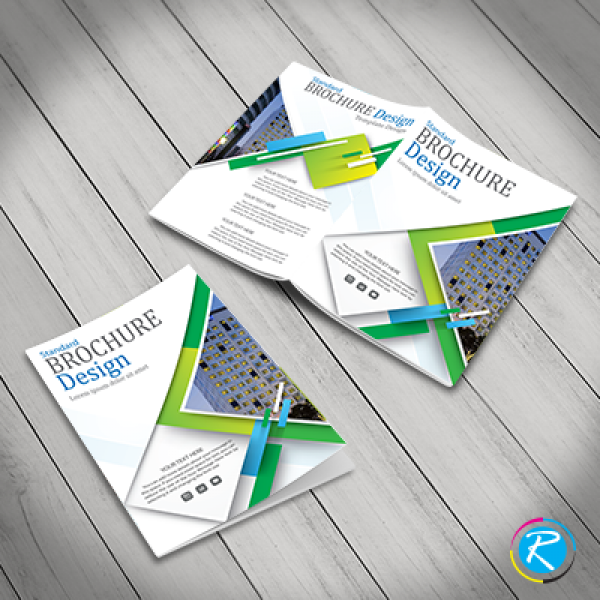
Custom Brochures
Starting at
$220
Custom brochures are built around whatever fold, page count and size your project actually needs, rather than a fixed tri-fold or standard letter layout. That makes them the right call when your content doesn't map cleanly onto a standard fold — a product catalog with more panels than a tri-fold can hold, an oversized format for trade-show handouts, or an unusual panel count built for a specific display rack. Tell us the fold style, size, page count and finish, and we'll build the layout around how the piece will actually be read and handled.
Guaranteed Features:
Any custom size, fold and page count, with free design proofing
Free lamination (waterproof, gloss/matte)
Die-cutting, gluing and scoring included
Free proof before printing (flat view, 3D mock-up or hard copy)
- Category
- Events & Promotions
- Customization
- Free design & proofing
- Finishing
- Die-cut, glue & score incl.
- Lamination
- Gloss / matte available
Free proof before production — flat view, 3D mock-up or hard copy
Custom size, stock and finish on every order
Dedicated support through production and shipping
Full Description
A standard brochure comes in one of a handful of familiar shapes — a letter-size tri-fold, a legal-size sheet with an extra panel, a larger format for more visual content. A custom brochure order exists for projects that don't fit neatly into any of those templates: a product catalog that needs more panels than a tri-fold offers, an oversized piece built for a trade-show table, a square or unusually proportioned format, or a page count that calls for saddle-stitching rather than a simple fold.
The fold does most of the work in how a brochure gets read, so it's worth choosing it around the content rather than the other way around. A half-fold or bi-fold keeps things simple for a short message with a strong cover. A tri-fold or z-fold breaks content into a sequence of panels that guide the reader from one idea to the next. A gate-fold, where both outer panels open inward toward the center, suits a dramatic reveal — a before-and-after, a product unveiling, a map that unfolds to full size. A roll-fold, where each panel nests inside the next, works well for step-by-step content that benefits from a fixed reading order.
Paper choice matters more on a custom brochure than people expect. A lighter text-weight stock, generally in the 80 lb to 100 lb range, folds cleanly and keeps a multi-panel piece from feeling stiff or bulky, while a heavier cover-weight stock gives a shorter piece more presence on a table or in a bag but can crack along the fold if it isn't scored first. Lamination adds durability for a brochure meant to be handled repeatedly — at a trade show, in a waiting room — while an uncoated or soft-touch stock reads as more premium for a piece meant to be kept rather than skimmed and set aside.
Because the specifications are entirely custom, it helps to settle a few things before requesting a quote: the finished size, the fold style and resulting panel count, whether the piece needs to accommodate future content updates, and how many you'll need for the current campaign versus ongoing use. Getting those details locked in early keeps the proofing process fast and avoids a reprint once you see how the fold actually reads in hand.
You Might Also Need